






Year One
Yep, it comes a bit late. I had a small health issue with my middle fingers, plus Black Friday chaos and the launch of my first Commodore Amiga device. Typing for long was painful and, sadly, Neuralink isn’t quite there yet. But here we are.
Year Zero was about laying the cornerstones for growth. Year One was different. More building, more experiments, more highs and lows. A proper rollercoaster. And honestly… a lot of fun. I enjoyed every minute of it.
During Year Zero everything happened by accident. I built devices because I wanted them. They sold because people kept asking. Year One flipped that around. It was the first time I treated SidecarTridge as an actual project, something with shape, pace, and identity.
Dropping boring things

Right before kicking off SidecarTridge I ditched a project I had spent 18 months building with some partners. Thirty years in tech gives you a special talent for spotting when something is turning into homework. And I don’t do homework. So I bailed. Just a clean jump off a moving wagon.
I wanted something that would punch my brain back into excitement mode. Retro hardware for my beloved Atari ST was perfect. And honestly, I hadn’t felt that spark of “wow, this is fun again” since the day I escaped Java development.
After Year Zero the decision was obvious. Either turn SidecarTridge into something real, or keep treating it like a Sunday-afternoon toy. So I pushed some of my professional commitments aside and doubled down on SidecarTridge. Best decision of the year.
Stability over Novelty. Focusing on the 1%
Shifting left means catching problems early, when they’re cheap and painless. I’ve been doing that since the start, probably a side effect of spending half my life building software products. Year One pushed that instinct even further.
When 99% of a product works, the interesting part is the remaining 1%. The weird edge cases. That’s the fun stuff. Once things run smoothly and predictably, the challenge moves to hunting down imperfections.
This year was about turning cool prototypes into devices people can actually trust. Make them solid. Fix the rough spots. Add better testing, tighter manufacturing, and smoother firmware updates. Less chaos, more confidence.
The Birth of an Ecosystem
This was the year SidecarTridge stopped being a bag of unrelated gadgets thrown together by a sleep-deprived engineer in his fifties with a soldering iron. I finally started building a real ecosystem: microfirmwares, OTA updates, shared tools, consistent documentation, and a long-term firmware architecture. The idea was simple. If you’ve used one SidecarTridge device, the rest should feel instantly familiar. Same logic, same vibe, same “yep, this makes sense.”
A big part of that ecosystem comes from the Raspberry Pi RP2040 and RP2350 families. I use them everywhere, so a shared codebase was inevitable. I got tired of rewriting the same thing in slightly different shapes, like some embedded-engineering Groundhog Day.
Booster is the shared DNA. The common brain. The thing that makes all devices feel like siblings instead of distant cousins. With that foundation in place, I could finally build not only for the Atari ST but also for the Amiga. And more machines will join the family. Once the ecosystem exists, adding platforms becomes less “new project panic” and more “let’s plug this in and see what catches fire.”
And yes, a unified ecosystem also means fewer support tickets, fewer “I swear I followed the steps” emails, and fewer long nights debugging something that only breaks for one guy in Wyoming. This was the year SidecarTridge started acting like a small planet with gravity. Wth enough to keep a few satellites happily orbiting.
The Dark side of E-commerce
Two big things changed this year: the customer profile and the appearance of scammers. The customer shift was actually good news. We moved from retro early adopters (the “buy first, figure it out later” crowd) to retro hobbyists who buy something because they actually need it. Early adopters never cared about rough edges. Some even told me “oh, the device does not work. But it is fine, maker tax, whatever,” which left me blinking at the screen. That phase is gone. New customers expect polished products.
I got some dudes comparing homebrew hardware with Aliexpress hardware, which is adorable. I’m sure there’s a factory in Shenzhen mass-producing custom SidecarTridge clones for twelve cents…Totally. More visibility, more variety, more questions.
The only real shadow this year came from scammers. A few people learned how to abuse eBay and Klarna rules to rip off small makers. After dealing with that circus, I dropped eBay completely, I don’t regret. The financial impact was tiny, but the stress reduction was huge, and I got my time back to do the fun part: building stuff. Some of them were so proud of my stealing my products that they even posted it in the forums!
Excel-driven development

At some point this year I realised that building hardware isn’t just soldering, coding, and trying not to burn your fingers and sniffing flux. It’s also spreadsheets. Many spreadsheets. Turns out Excel is a brutal but honest partner: it tells you what things really cost, how many units you can afford to build, and which ideas are cool but financially suicidal.
Material cost, component prices, batch sizes, manufacturing quotes… yes, everything ends up in the spreadsheet. Excel keeps me honest. But it doesn’t get the final word. The numbers guide the decision, they don’t make it. If the spreadsheet says “no”, I listen. If it says “yes”, I still ask myself one thing: do I actually want to build this? Because in the end, SidecarTridge exists to build things I enjoy. Excel sets the boundaries. Joy decides what happens inside them.
This was also the year I finally accepted I shouldn’t be soldering or making cable harnesses at home like a medieval monk illuminating manuscripts. I found partners to handle the boring, repetitive stuff so I can focus on the fun, brain-melting parts. I avoid manual through-hole soldering whenever I can and stick to surface mount and reflow. That decision was half common sense (my time isn’t cheap) and half pure Excel logic.
Scaling means understanding the economics. And honestly, once you embrace the spreadsheet, life gets easier. Still not fun, but easier.
Mechanical Design Is Not Optional
Through-hole components are great until you’re the one soldering them. They take time, they’re error-prone, and they turn your desk into a patience endurance test. So I’ve been moving everything I can to SMD and letting the PCB factory handle the reflow magic. My hands thank me. My deadlines thank me. Even my sanity gets a small break.
But going SMD-first forced me to rethink mechanical design from the ground up. I spent a good chunk of the year figuring out how to shape boards so they’re sturdy, consistent, easy to assemble, and easy to manufacture. No more “I’ll just wiggle it in and hope for the best.” Now every device starts with the enclosure in mind and with a clear plan for how it will fit inside the computer without removing metal cages or doing retro-surgery.
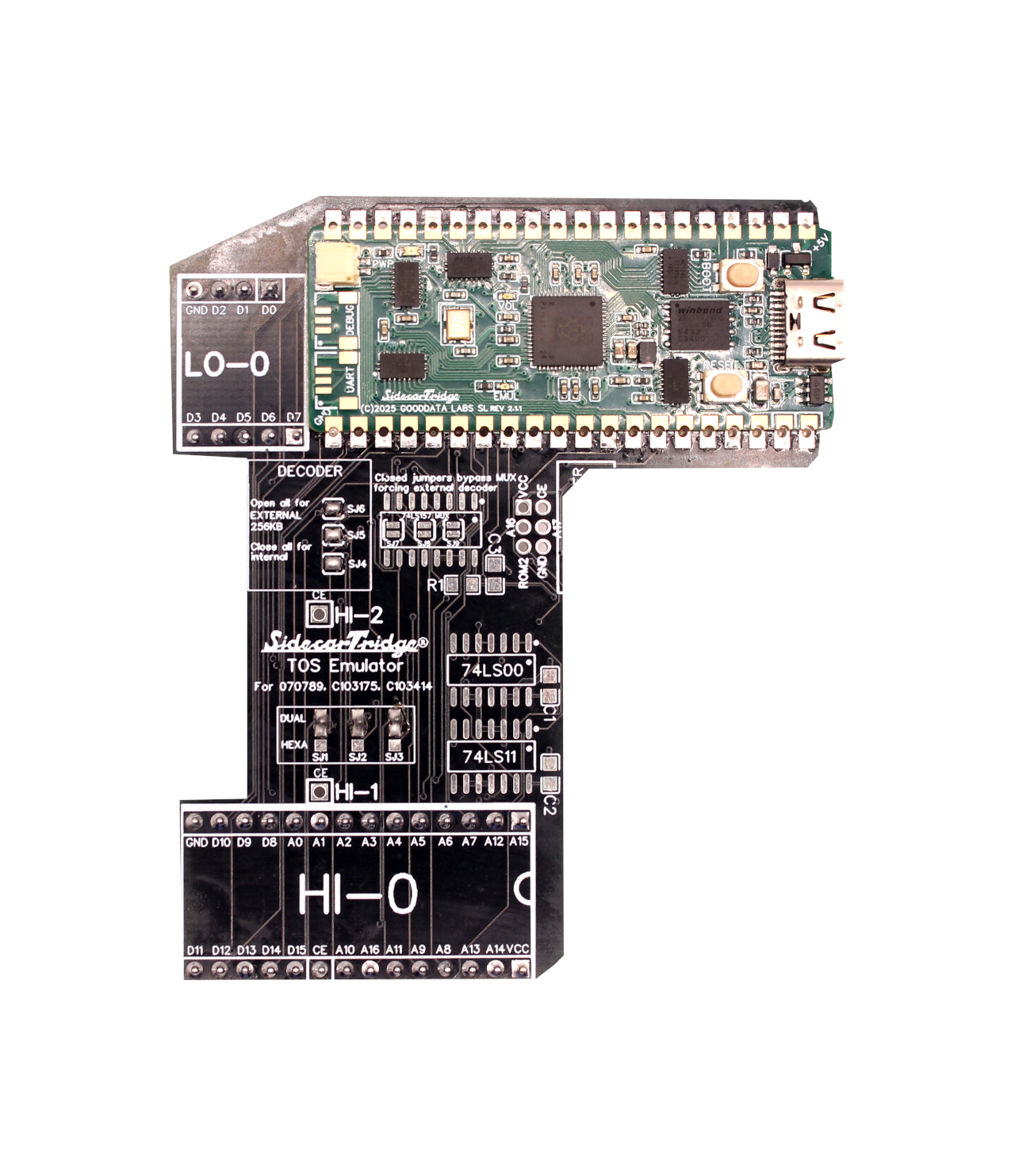
I even designed a custom pin for the TOS Emulators to get them as close to the motherboard as possible so they could fit into tight spaces, like under the PSU in the C070523 board. Not cheap. But in China, if you can describe it, someone will manufacture it.
The unexpected bonus is that good mechanical design saves money, prevents stupid mistakes, and reduces support tickets. Thinking in 3D pays off.
Amiga Does Not Suck

The Amiga vs Atari ST beef is still alive in 2025. Incredible. Some people treat it like a religion. I still don’t get it.
When I started my first Amiga project, my knowledge level was basically zero. And the hardware learning curve was a joy. It’s obvious the Amiga was designed by someone with a brain tuned for brilliance. Elegant, clever, way ahead of its time. A hardware masterpiece that somehow ended up appreciated mostly by the multimedia crowd. A real shame.
Software… different story. As beautiful as the hardware is, AmigaOS just didn’t click for me. And I’m not comparing it to UNIX, CP/M, or DOS. Even putting it next to TOS makes me twitch. TOS is basically CP/M tuned for Tramiel wishes, so if you’ve used CP/M or DOS you feel at home instantly. But AmigaOS? What exactly is it? An operating system? A BIOS? A philosophical puzzle with message ports? No idea. Lots of great ideas, yes, but something fundamental feels off.
Maybe I’m picky. Maybe after almost 30 years working with DOS, Win32, and UNIX my brain is permanently biased. But I didn’t have a great time developing for AmigaOS. The hardware though? Pure joy.
The Commodore Amiga outsold the Atari ST by a factor of two or three, and while the ST community is still very much alive, it’s tiny compared to the Amiga scene in 2025. The result is impressive: the amount and quality of new hardware and software being released is honestly stunning for a machine that supposedly died thirty years ago.
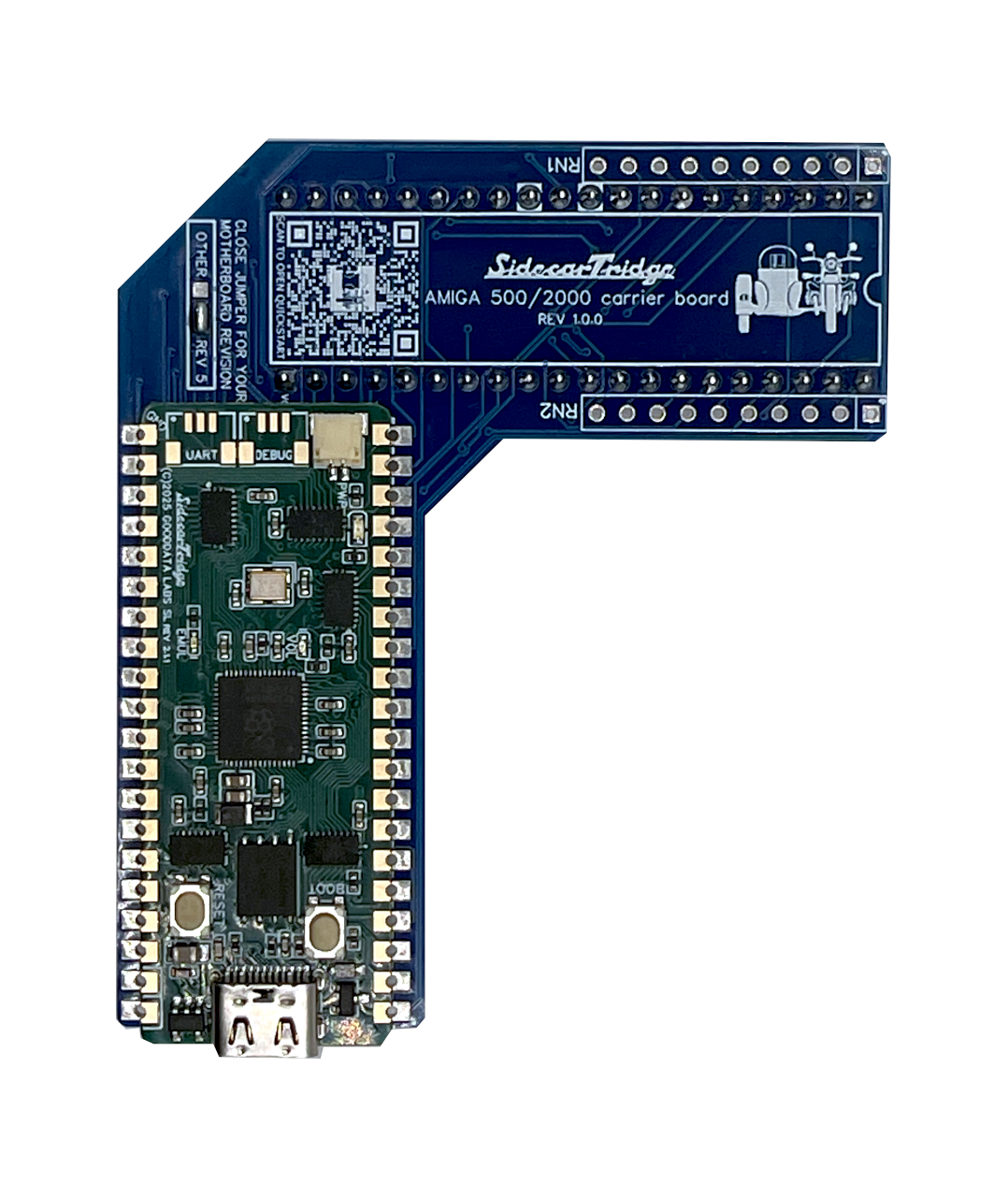
At one point I almost stopped working on the Amiga Kickstart Emulator because I thought nobody would care. With so many gadgets already available, it felt like adding one more drop to an already full glass.
The Europe of the Bureaucrats

This isn’t a political rant, but European bureaucracy makes running a small hardware business harder than it should be. Environmental taxes, import duties, and 27 different sets of rules don’t exactly encourage innovation. It’s not a local issue. It’s structural.
I ship worldwide, and ironically some of the worst postal experiences come from Europe’s most “advanced” countries. Lost packages, zero accountability, and premium prices for very un-premium service. I even had to pause shipping to a few places just to stay sane.
The real headache, though, is recycling compliance. In theory you register once per country. In practice I couldn’t even finish the process in Spain because the ministry’s website has been broken for 18 months. While that was happening, ECOEMBES decided to sue me for not completing a process their system wouldn’t let me finish. The twist? I’m fully registered under another scheme, PROCIRCULAR. Competition is still a novel concept for some.
Don’t bother me with the sad things. What’s next?
There are plenty of projects lined up for 2026 and 2027, so let’s jump straight into the fun part
SidecarTridge “Croissant”
Croissant is a project for Atari ST, STE, Mega ST, and Mega STE that sat on the bench for almost a year because it refused to work reliably. It ran 9 out of 10 times and I had no idea why. Then, magically, a new RP2040 library release plus dropping the clock frequency made it rock solid.
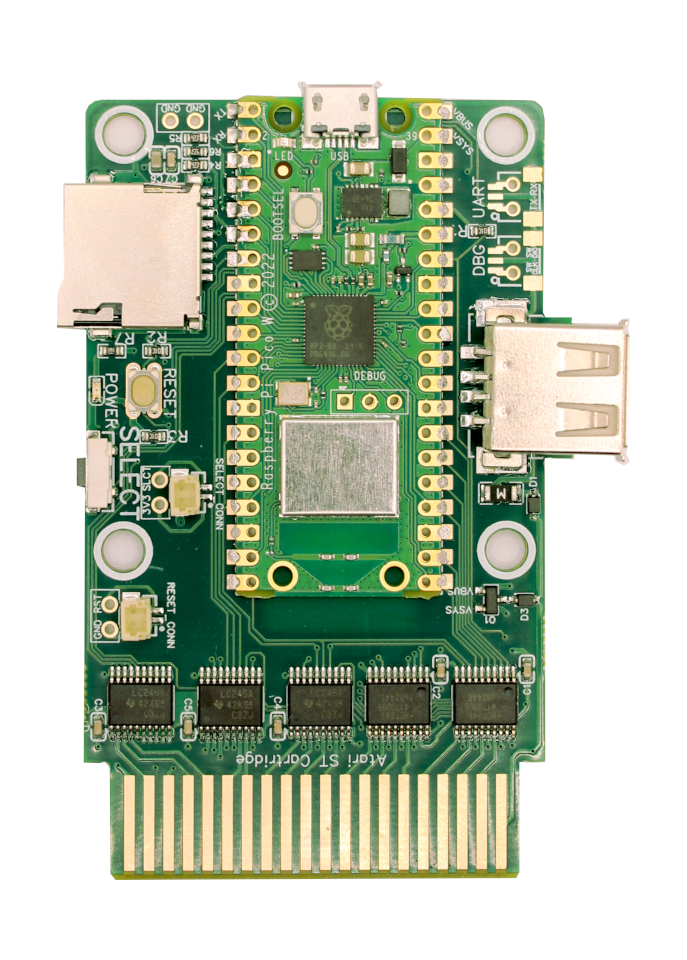
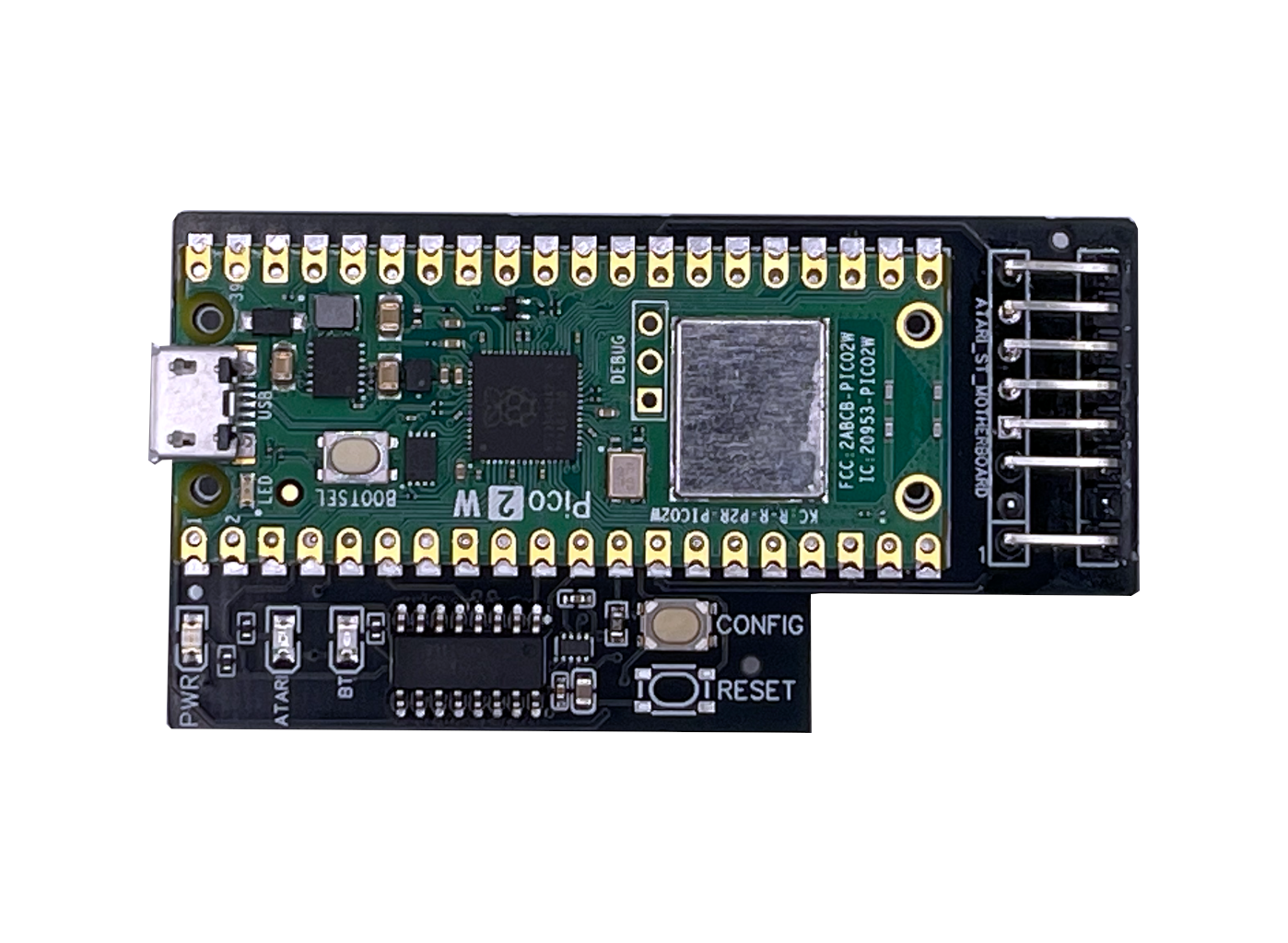
Croissant is a tiny internal module that plugs into the keyboard connector and lets you use Bluetooth keyboards, mice, and gamepads as joystick inputs. The original keyboard still works: you choose between Bluetooth or the original one at boot. Configuration happens through a web interface, like the Multidevice.
Expect it early 2026.
SidecarTridge ACSI2STM Mini
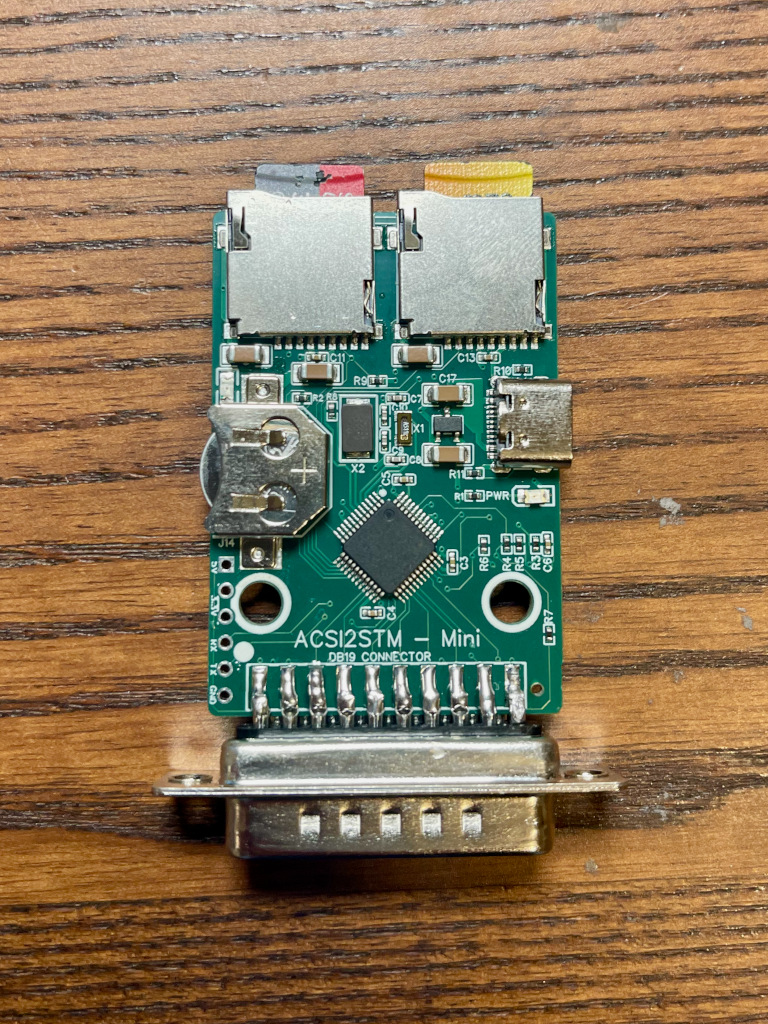
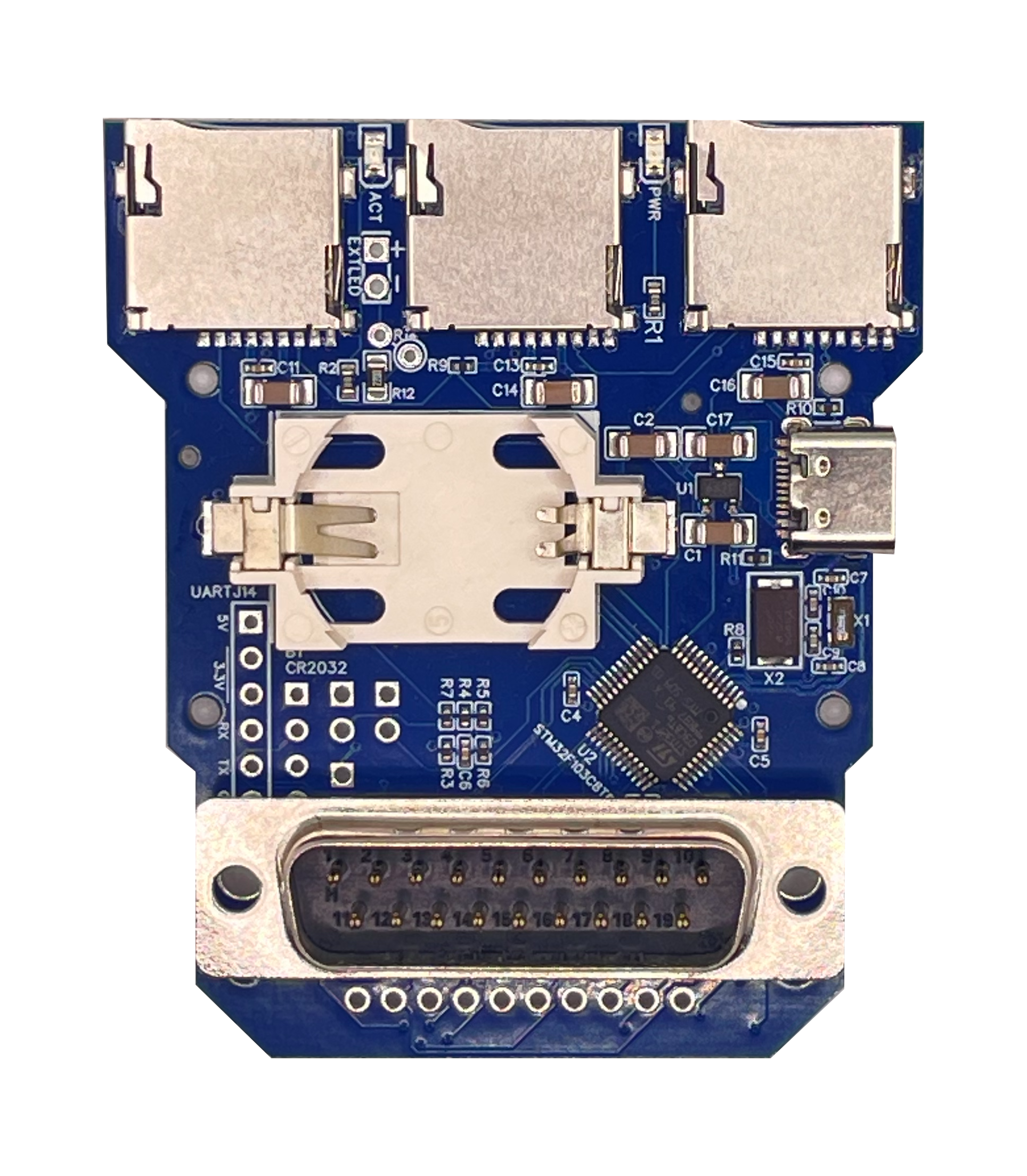
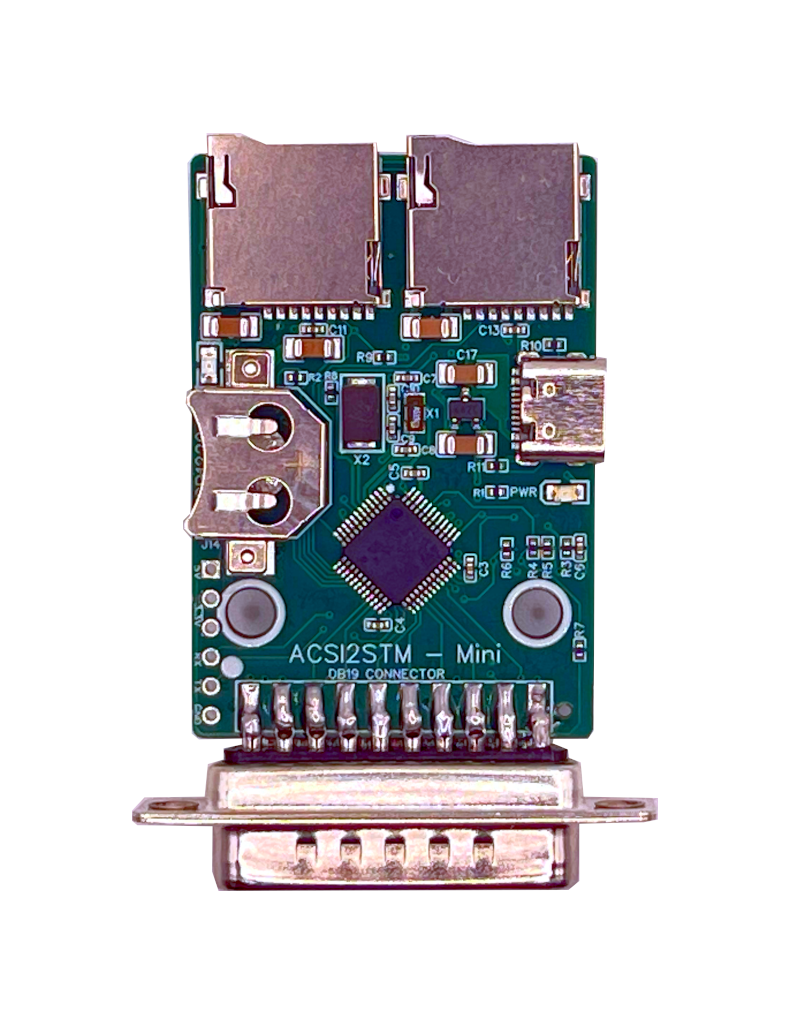
The ACSI2STM has a rock solid firmare and I love it. When I finally got DB19 connectors I wanted to rebuild completely the mechanical design of the board:
- Reduce the footprint by 50% or more.
- Use 2 micro-SD slots instead of 3. The third slot uses a lot of real estate and increases costs.
- Change the bulky CR2032 battery holder with a smaller CR1225,
- Remove the SATAN connector
- Remove the external LED connector
With all these changes, it is possible to get a fully working ACSI2STM adapted to the needs of new users willing to start the journey in the Atari ST world.
Early 2026.
SidecarTridge “Soufflé”
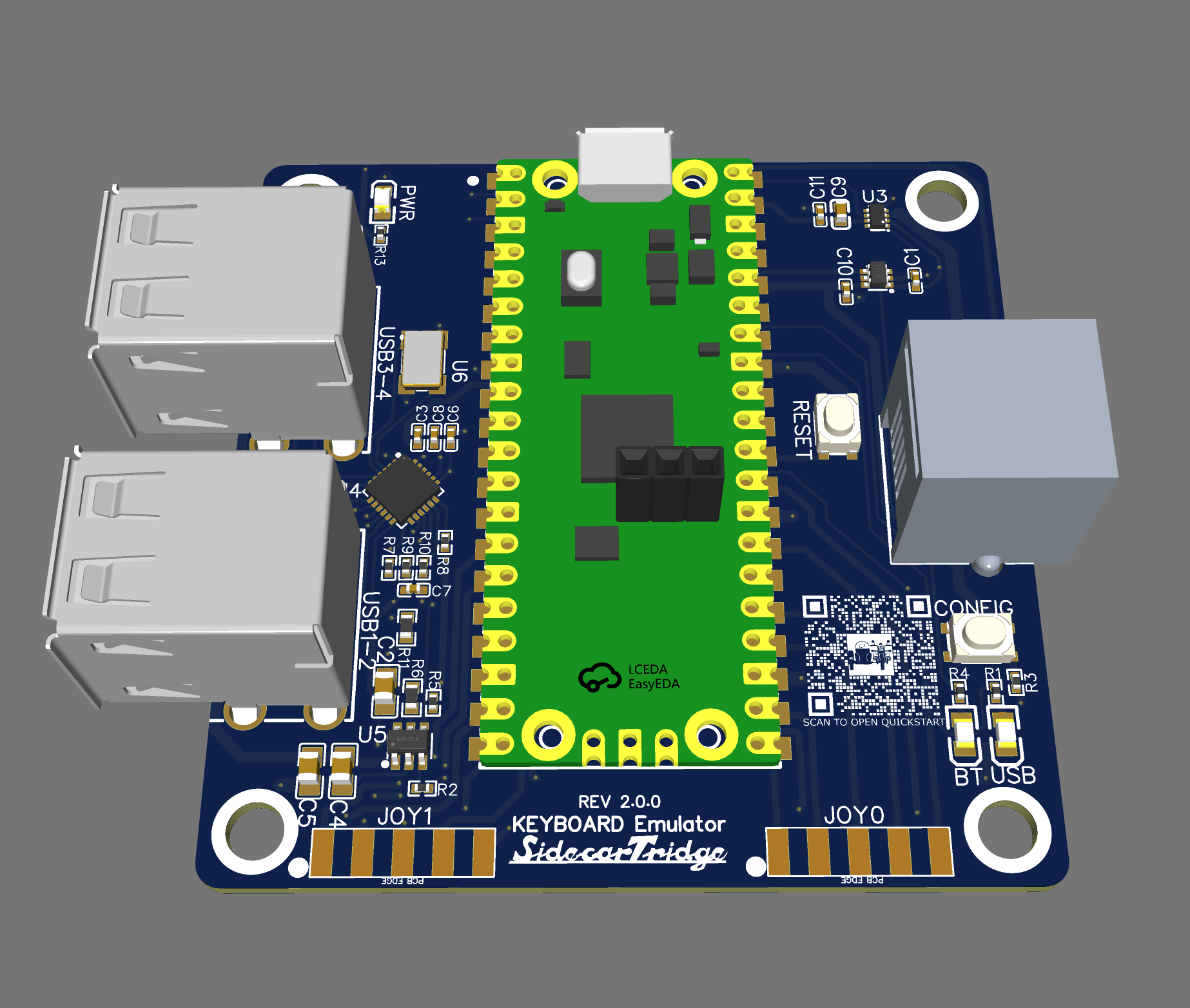
Soufflé is the Croissant’s cousin for the Atari Mega ST and Mega STE (and maybe the TT). It adds DB9 connectors for native joysticks and original mice, supports Bluetooth devices, and even handles USB.
If it doesn’t make it for early 2026, it’ll be out before mid-year.
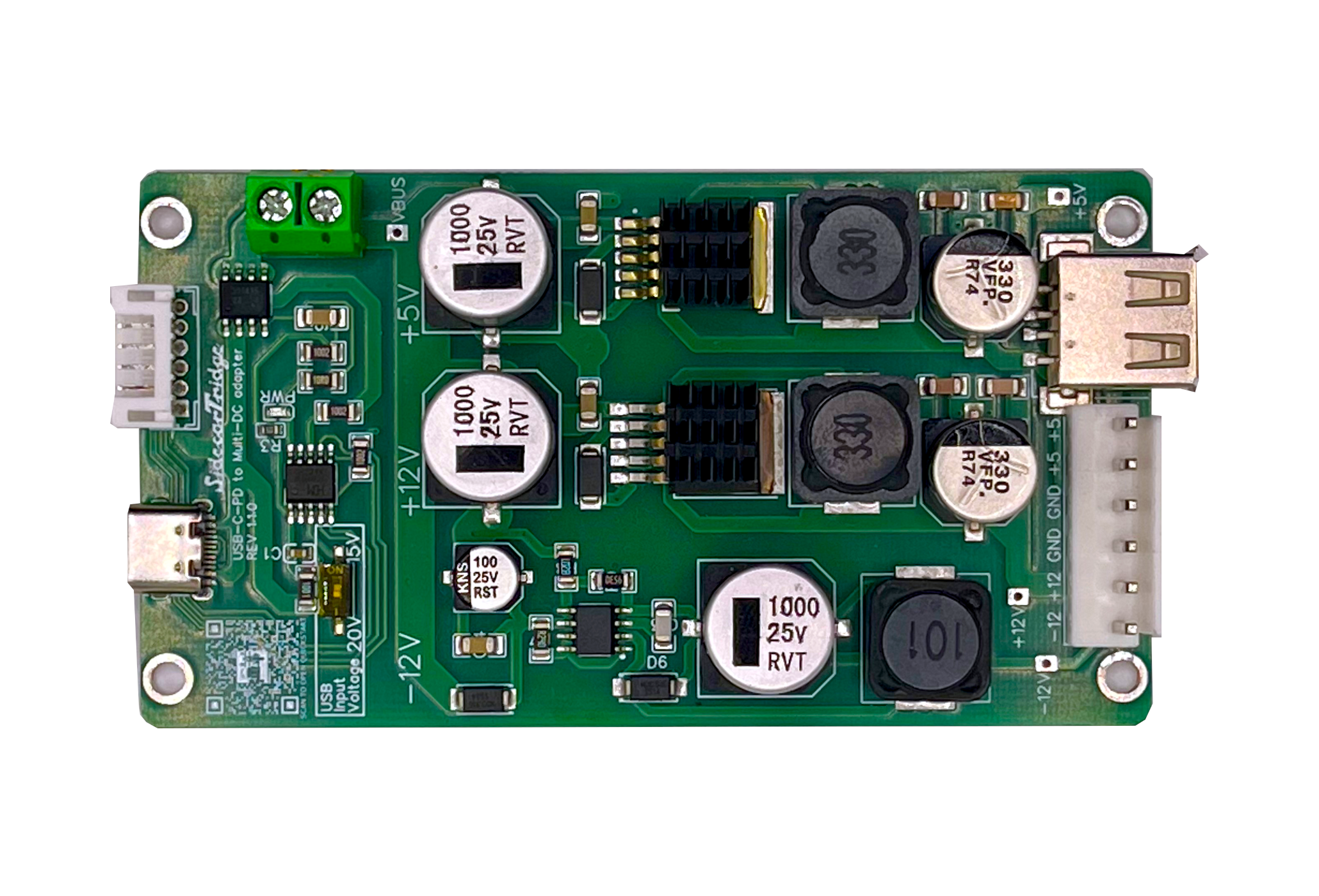
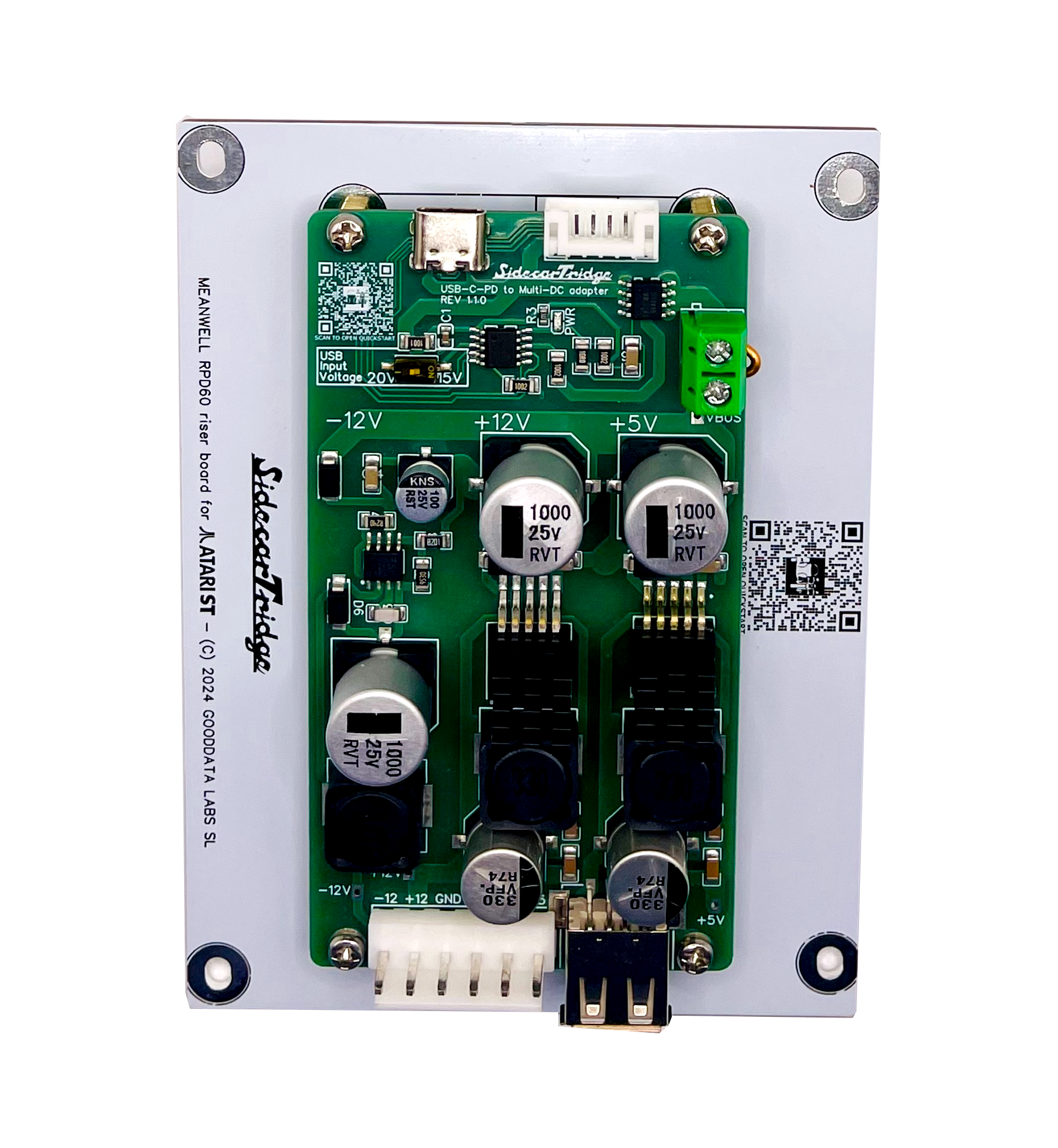
SidecarTridge “PD-USB External PSU for Atari ST”
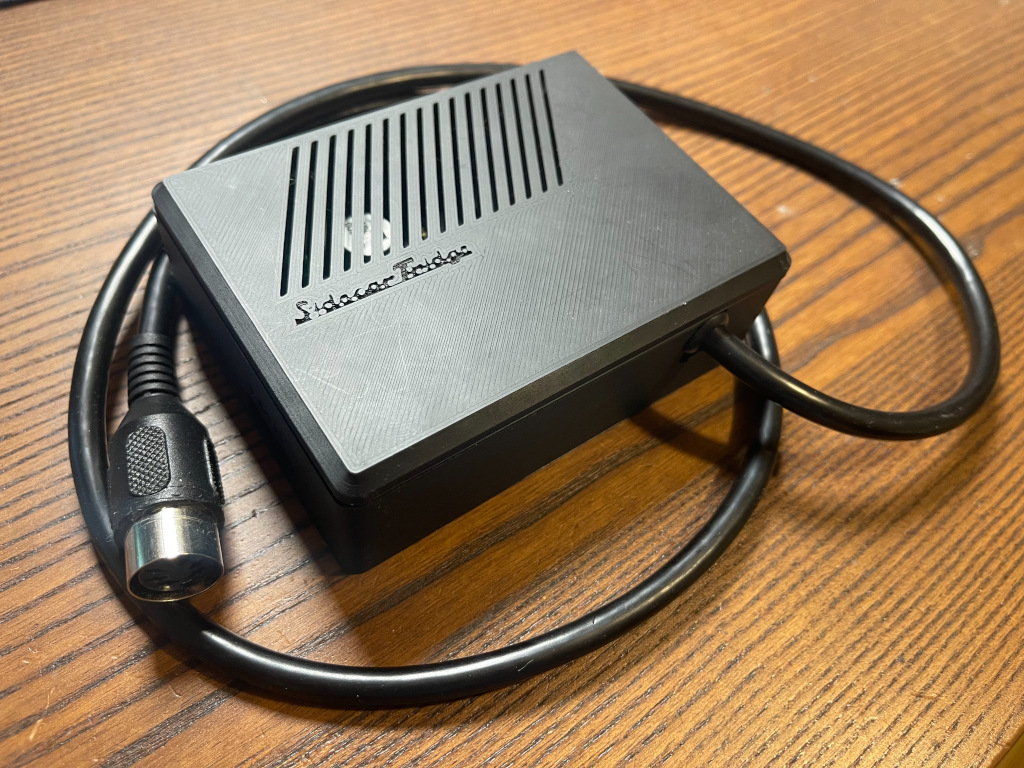
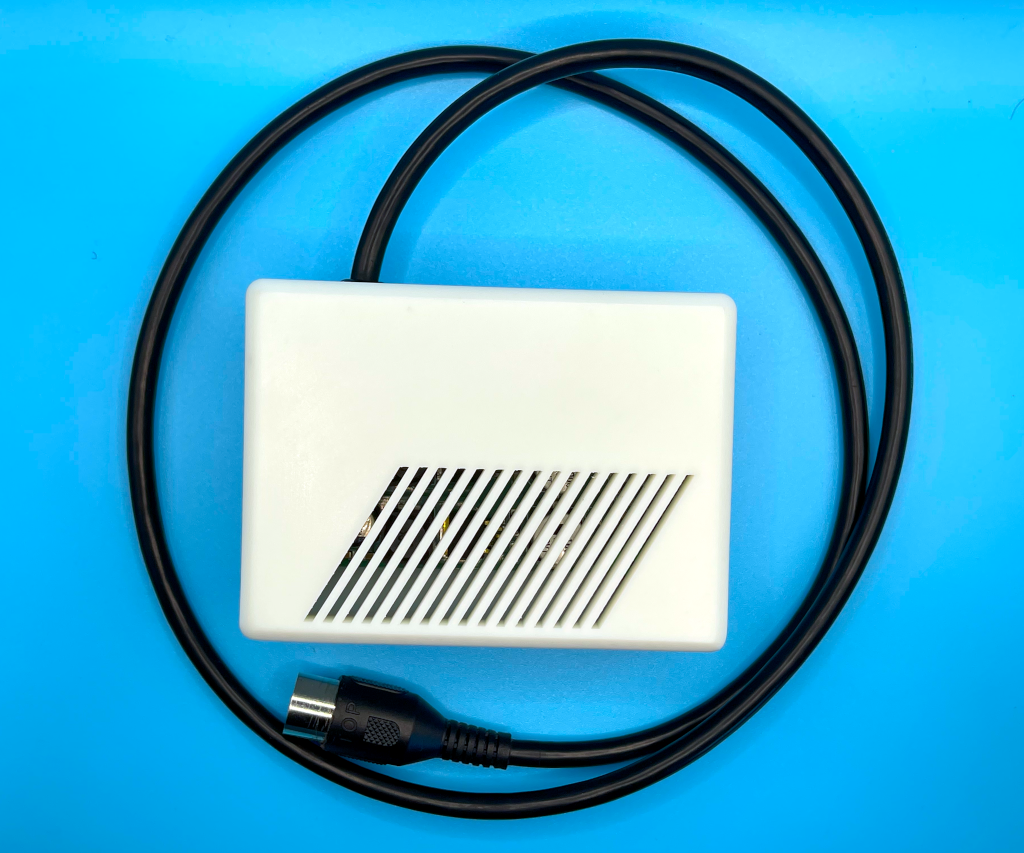
A USB-PD power supply for the short Atari ST models with external PSUs. It’s lovely, it works, and it’s sitting in the queue because I can’t multiply myself.
Early 2026.
SidecarTridge TOS Emulator for Atari Falcon
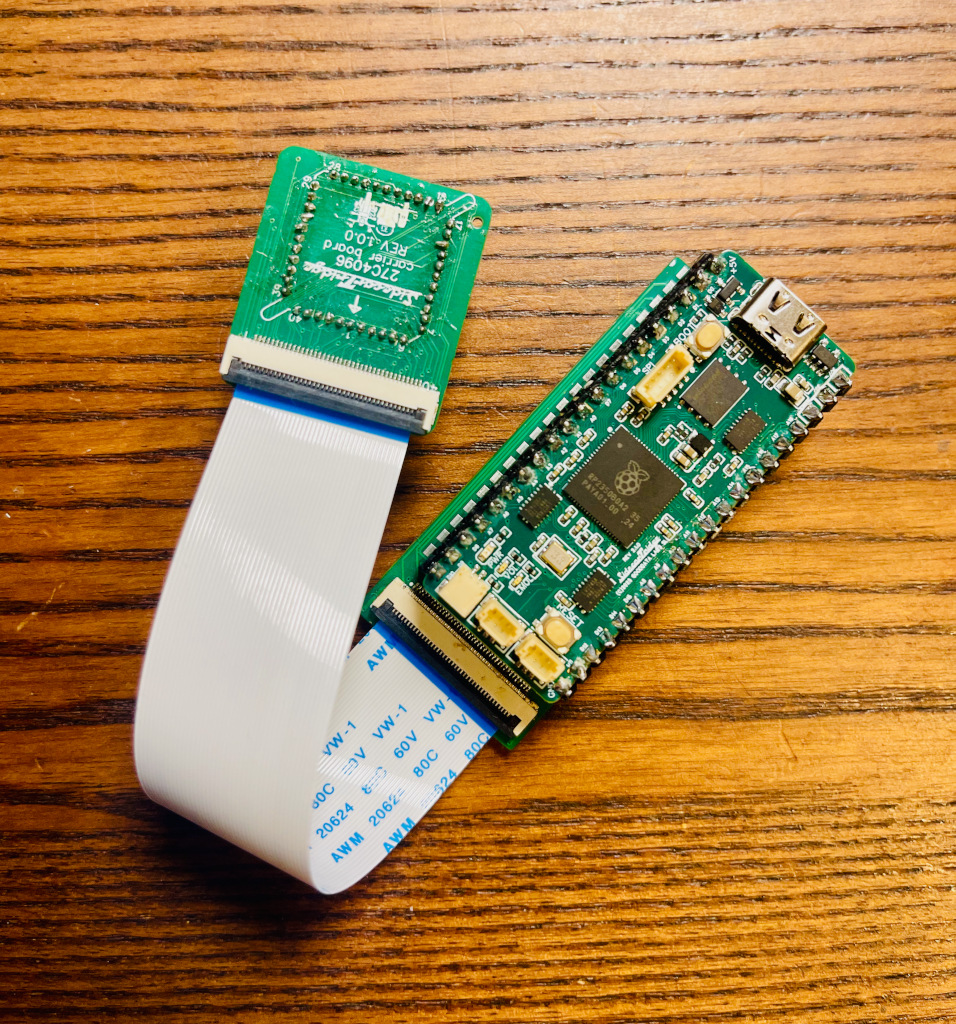
The device is done but not commercialized yet. Lack of bandwidth and the Amiga version took priority. Should land before mid-2026.
SidecarTridge “Crêperie”
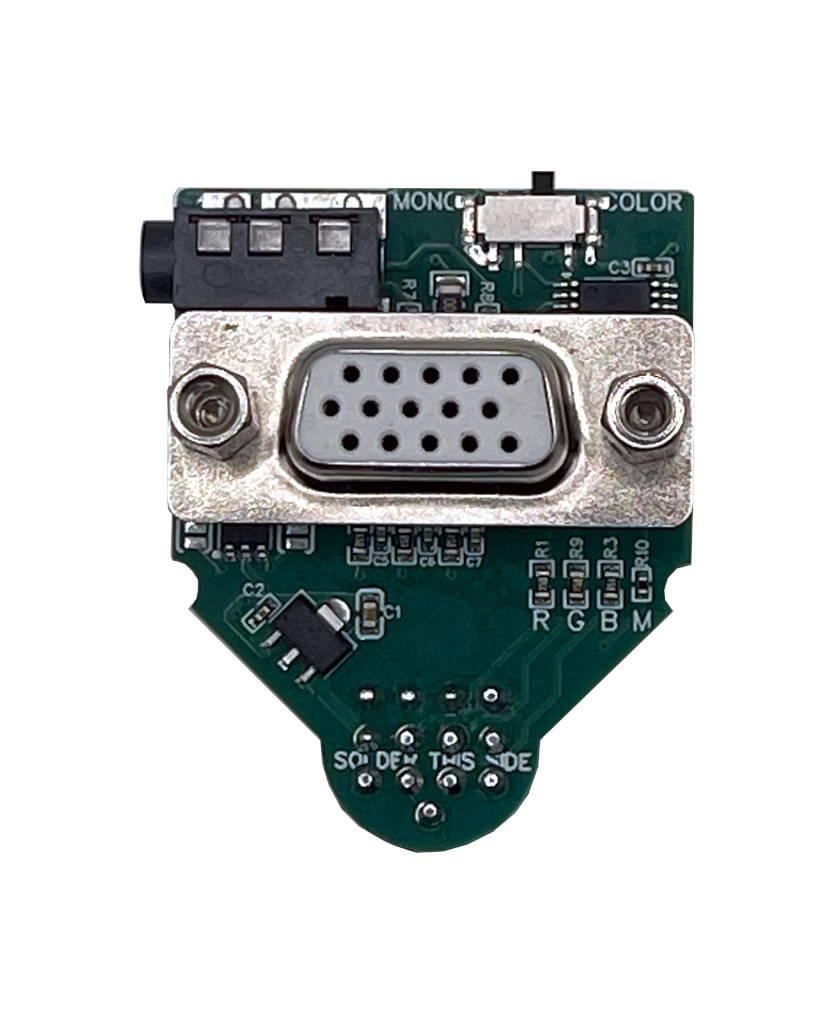
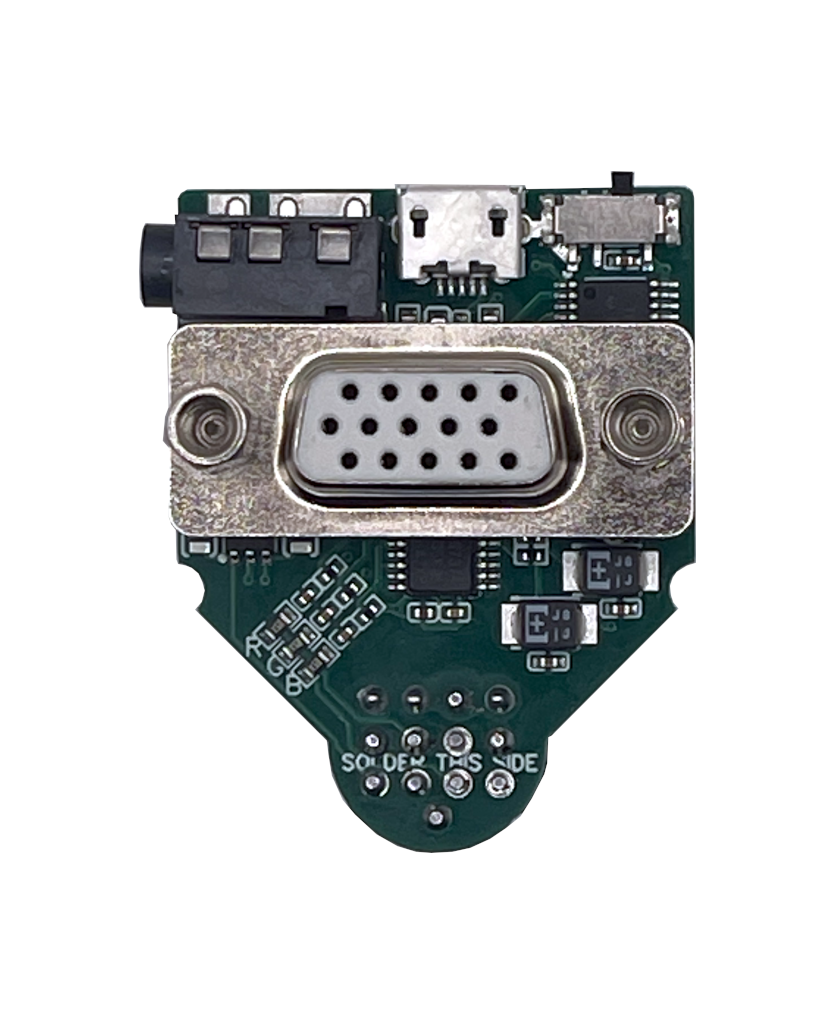
Crêperie is the next version of the ST2VGA adapter for ST/STE/Mega ST/Mega STE. It adds buffered hi-lo filters and gain stages to clean the noisy RGB signals of early Atari STs. Think of it like the Amiga vertical-line killers, but for Atari.
Testing hasn’t been great so far, but if things behave, it should be ready before mid-2026. A simplified version works, but I know I can do better. So I will.
SidecarTridge “Café au Lait”
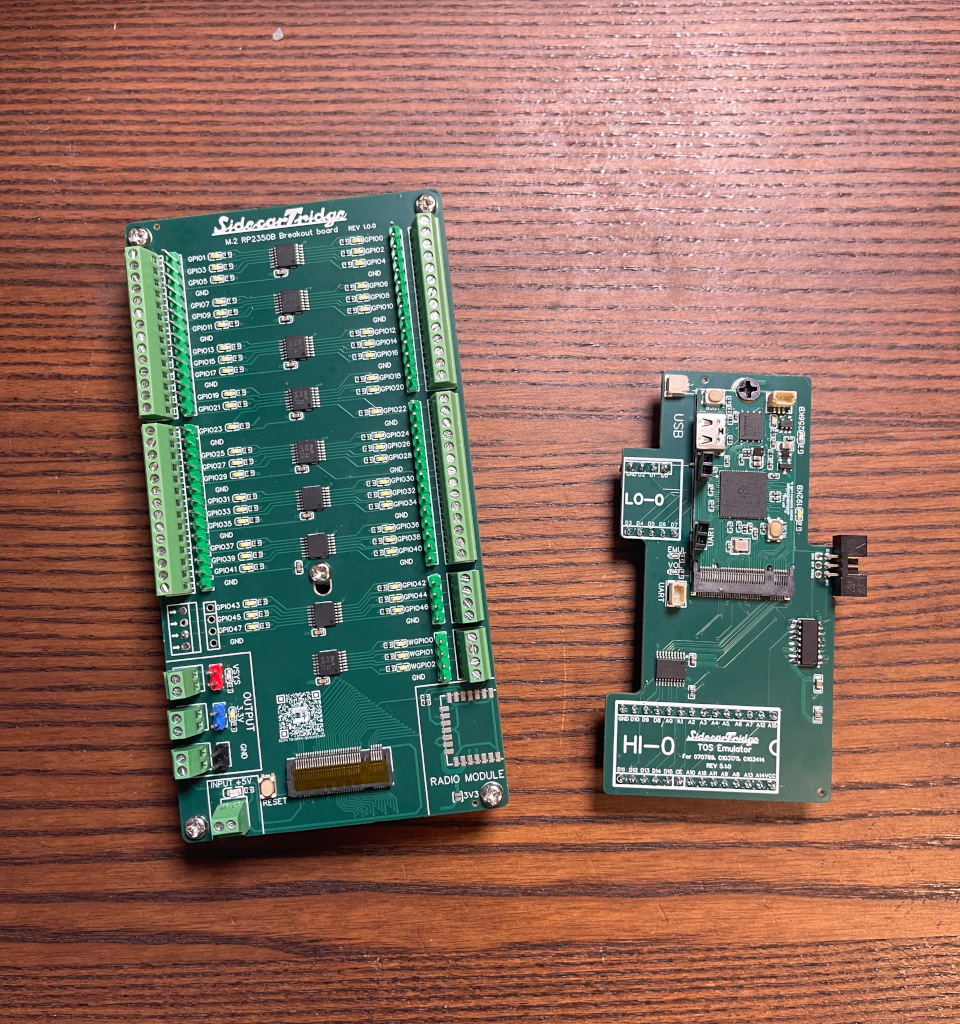
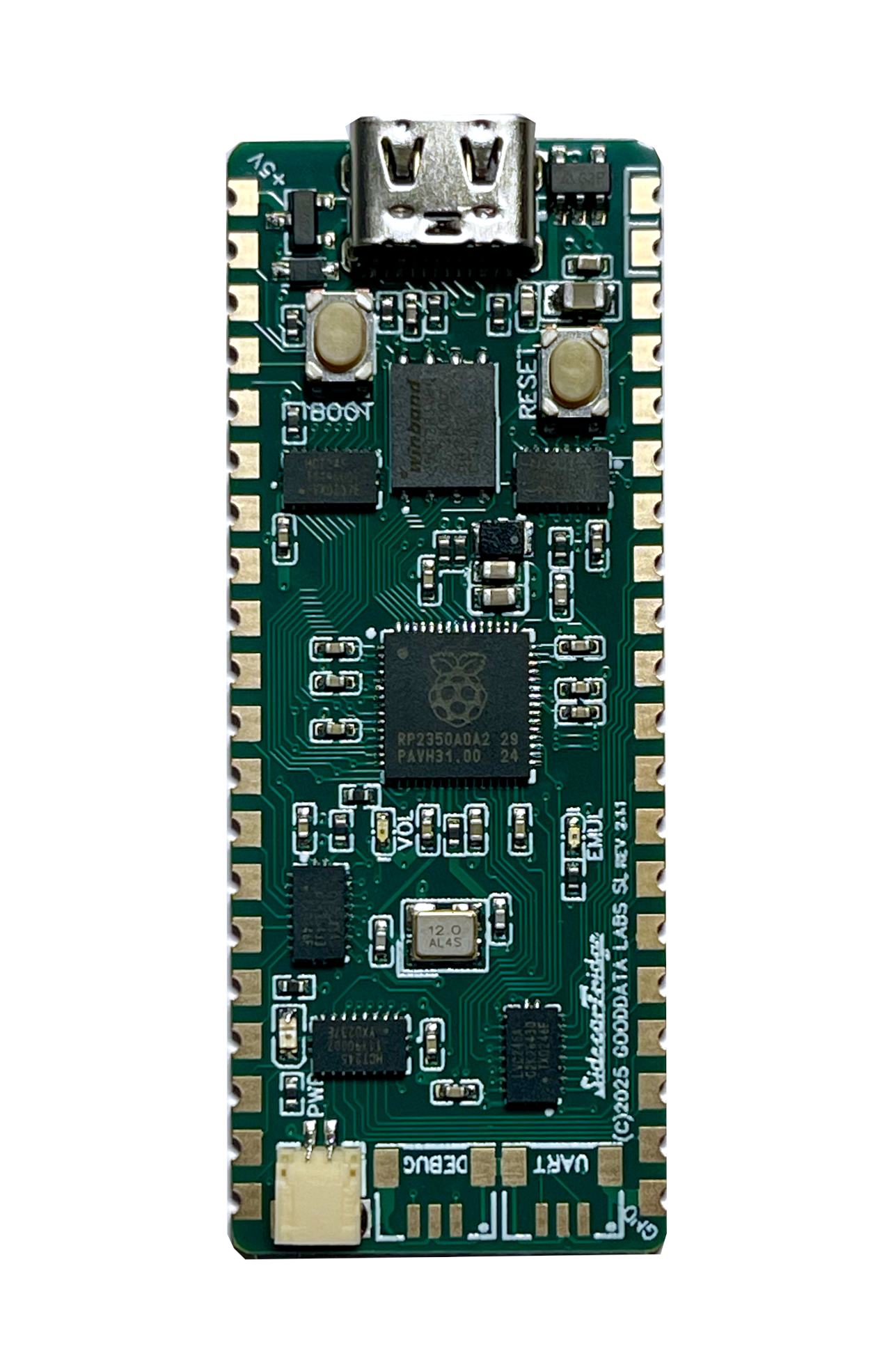
Café au Lait isn’t one device, but a full family. It’s based on a new architecture built on the RP2350 and will power the next Multidevice, new TOS/Kickstart Emulators, and even an experimental version for the Sega Mega Drive. It also aims to support 1MB ROMs (and beyond) for 32-bit Amigas.
And yes, the whole architecture will be open sourced. I already have a functional TOS Emulator running on it, but several months of testing lie ahead.
Mid-2026 to 2027.
How can I ping you when they’re ready?
Subscribe to the SidecarTridge Newsletter (you’ll also find it at the bottom of the page). I only email when there’s something worth sharing. No spam. Just launches, major updates, and the occasional behind-the-scenes. Roughly once a quarter.
You can follow SidecarTridge on X/Twitter. I often visit Atari-Forum and Retrowiki (Spanish only), don’t be shy and drop me a message if needed.
And what products and prototypes won’t make it?
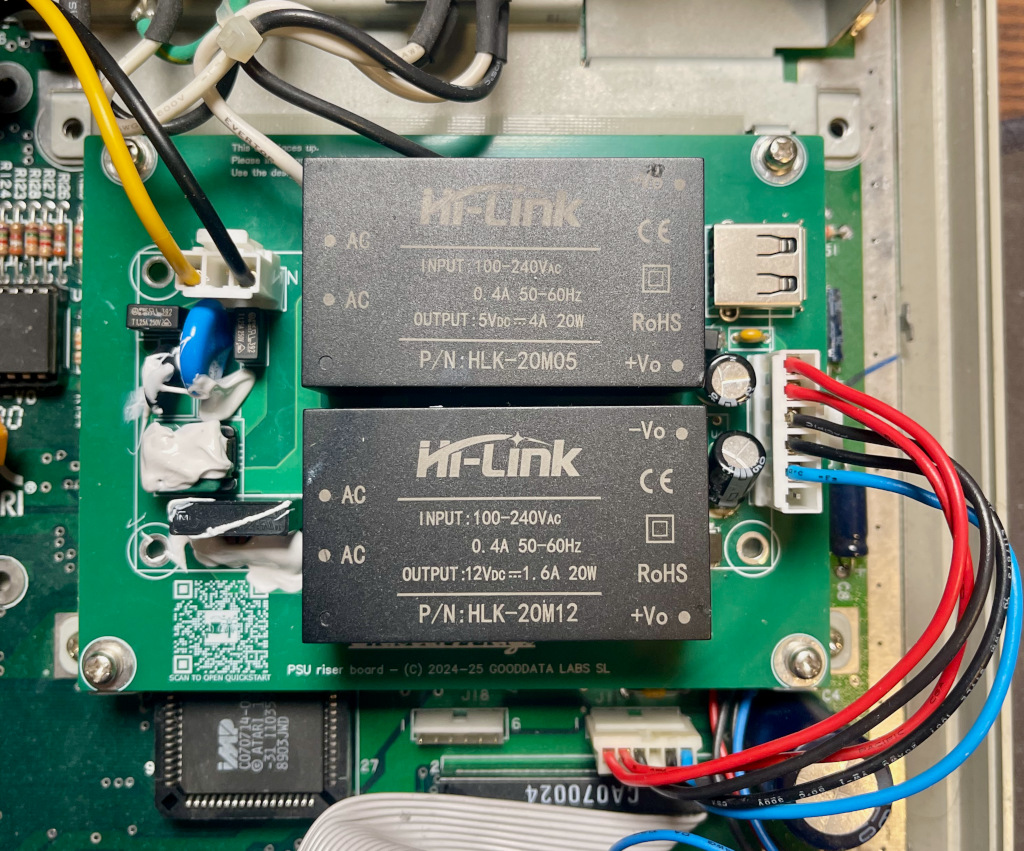
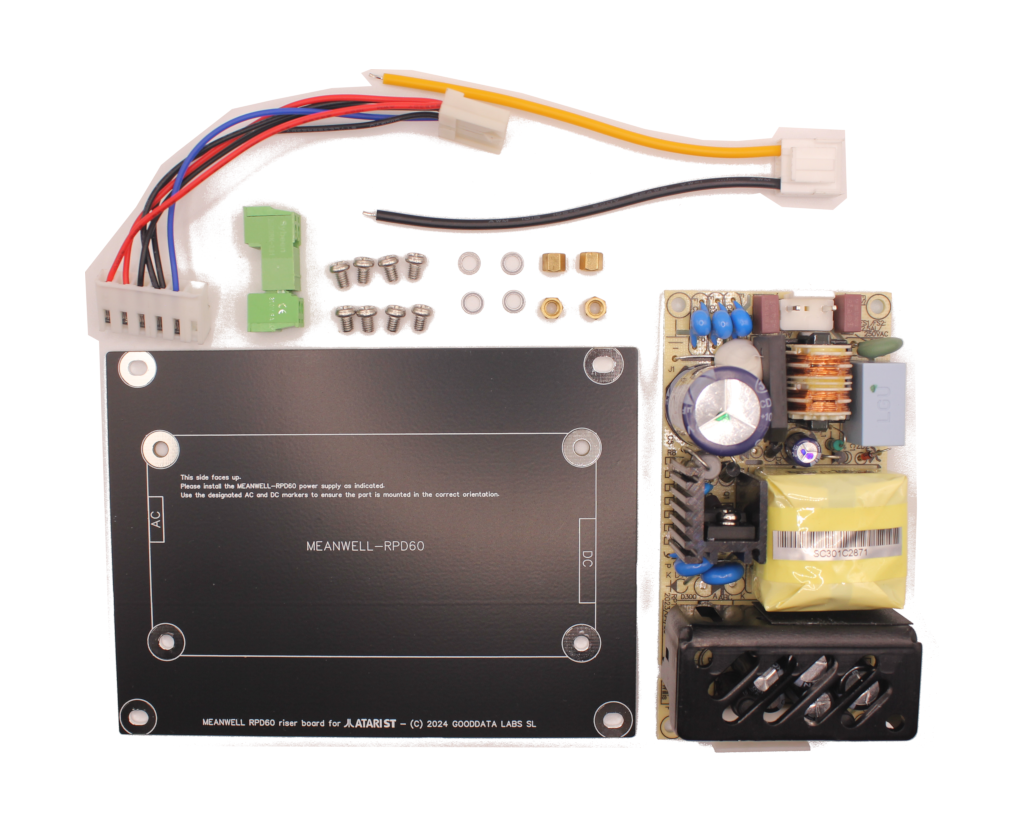
I’ve been testing a new AC/DC power supply for the Atari ST, STE, and Mega ST, and I’m genuinely proud of how it turned out. It’s rock solid and extremely reliable. But as the old software joke goes, anything above five volts is where my comfort zone ends.
Turning this into a real product would require full safety certification in Europe, and that’s well beyond what I can afford. Are there loopholes? Probably. Are they worth the risk? Most likely not. So for now, this one stays a prototype.
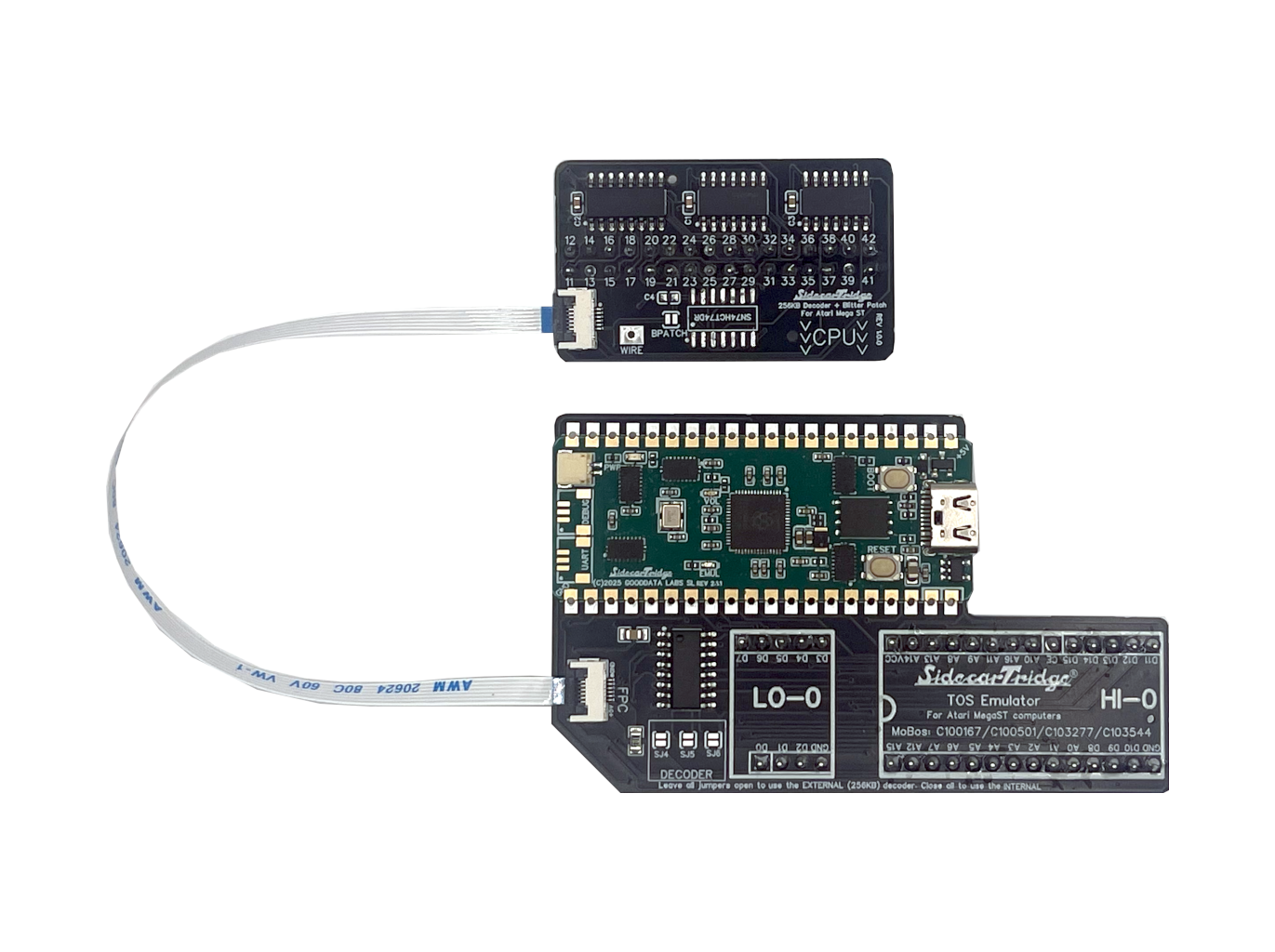
I’m also considering dropping the 256 KB Decoder version of the TOS Emulator altogether. Not because it doesn’t work -it works perfectly- but because it requires what I’d call hard modding: soldering directly onto chips or the motherboard.
Plenty of people understand the risks of modifying a nearly 40-year-old computer. Others… don’t. And when things go wrong, not everyone accepts that the problem might be lack of skill rather than the device itself. Unfortunately, it takes years to build a reputation and seconds to damage it.
I’ve spent a lot of time trying to lower the skill level required to install the 256 KB Decoder, but with machines like the Atari ST and Mega ST, where the MC68000 is soldered directly to the board, options are limited. Sometimes the right technical solution just isn’t the right product decision.
I will also drop the prototype of the external Amiga USB-PD power supply, the equivalent of the “short” Atari ST PSU-PD but for the Commodore Amiga 500. The reason is simple: the square DIN connector the Amiga uses is expensive and hard to source. Paying 6–8 € per connector feels like daylight robbery, and they’re only available in Europe and the US, which makes the cable harness economically unviable. Manufacturing the connector in China starts at 2,000 units, which would take me decades to sell. The harness could be made by the same supplier as the Atari ST one, but at that point it just doesn’t make sense.
That’s a wrap!
I never thought this would turn into a sustainable business. For the record, I finally bought an Atari Falcon, and I’m pretty sure its value has outperformed the S&P and Bitcoin combined. I also added a few Amigas, some consoles, and a bit more hardware to the collection. Some Atari STs were modded with accelerators for testing (some of them sadly burned during some tests, but that is another story). Profits from the crime back into criminal activities. You know how it goes.
While I was writing this and I read the Year Zero blog entry I think I have lost a bit the fun for the simple fact of having fun. In Year One was important not to lose money with a silly hobby that was out of control and turned into a not profitable business, and I got it. So now I don’t have the pressure of killing he company because it was expensive to keep it up and running. That is not the case anymore. So Year Two has to focus on building path for the next years.
Merry Christmas and Happy New Year 2026, folks!